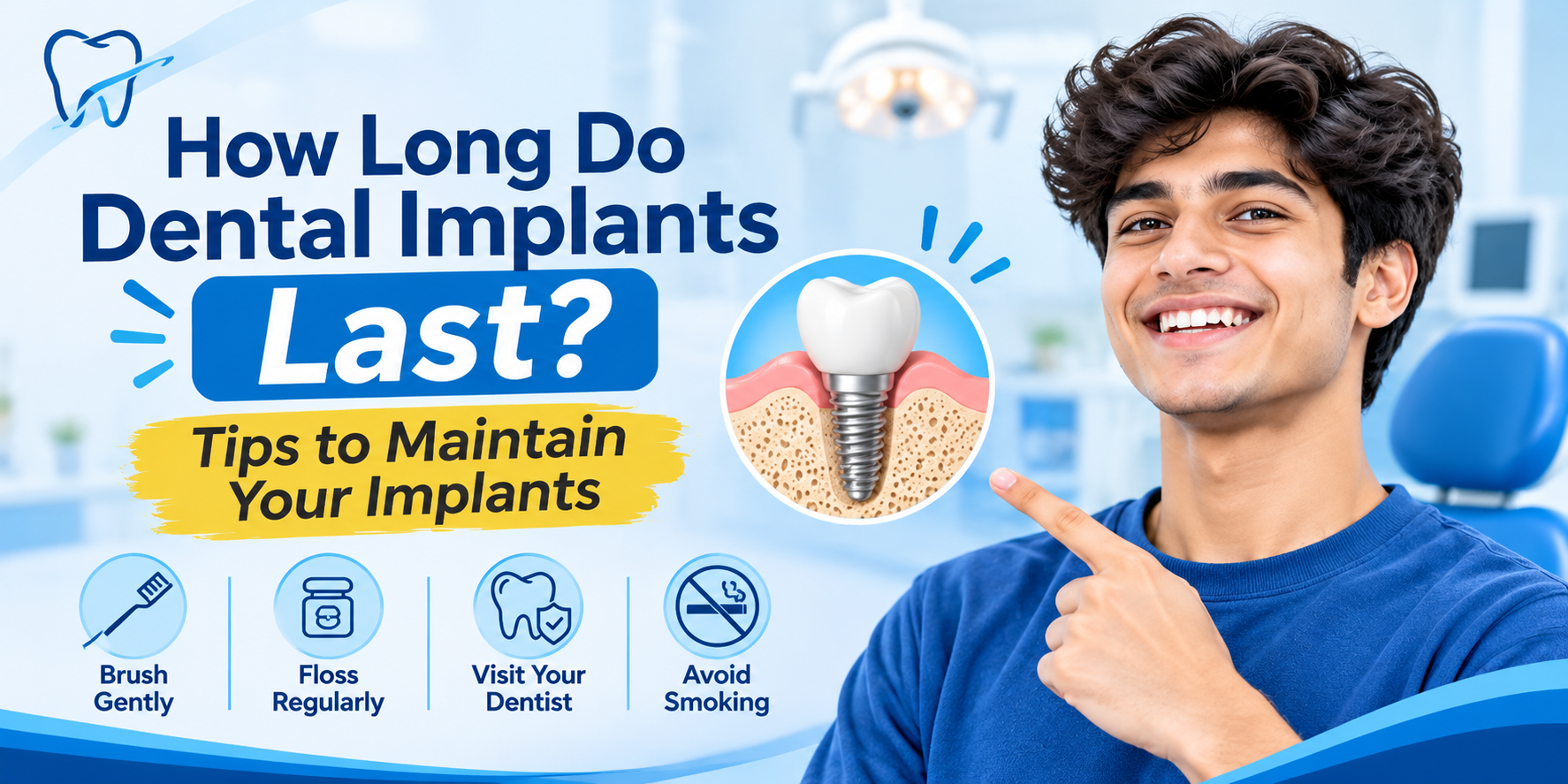
Dental implants are a popular solution for replacing missing teeth. They look, feel, and function much like natural teeth, helping people eat, speak, and smile with confidence. But one common question patients have before choosing this treatment is: How long do dental implants actually last?
The good news is that dental implants are designed to be a long-term tooth replacement option. With proper placement, good oral hygiene, and regular dental check-ups, they can last for many years. However, their lifespan depends on several factors, including your oral health, lifestyle habits, and how well you care for them.
In this blog, we will explore how long dental implants last and the simple steps you can follow to keep them in good condition.
How Long Do Dental Implants Last?
A dental implant consists of three main parts:
- Implant post: A small titanium or other biocompatible post placed into the jawbone to act as an artificial tooth root.
- Abutment: The connector that joins the implant post to the replacement tooth.
- Crown: The visible part designed to look and function like a natural tooth.
The implant post can last 15–25 years or even longer in many patients, while the crown may need replacement sooner due to normal wear and tear. These are general estimates, not a guarantee. Every patient's experience is different.
5 Factors That Affect the Lifespan of Dental Implants
Several factors can influence how long your dental implants last.
1. Oral Hygiene
Maintaining good oral hygiene is essential for protecting dental implants. Plaque can accumulate around the implant and affect the surrounding gums and bone.
Brush twice a day, clean between your teeth, and follow your dentist's recommendations for implant care.
2. Smoking and Tobacco Use
Smoking can affect blood circulation and healing, increasing the risk of implant complications. Tobacco use may also contribute to gum problems around implants.
Avoiding smoking and tobacco can help support better long-term implant health.
3. Regular Dental Check-ups
Routine dental visits help your dentist monitor the condition of your implant, gums, and surrounding bone. They can also identify early signs of inflammation or other complications.
Do not wait for pain or discomfort before scheduling a check-up.
4. Teeth Grinding and Jaw Clenching
Repeated grinding or clenching can put excessive pressure on dental implants and their crowns. Over time, this may cause wear, damage, or loosening of components.
If you grind your teeth, speak with your dentist. A protective night guard may be recommended.
5. Overall Health and Bone Condition
Healthy gums and sufficient jawbone support are important for implant stability. Certain health conditions and medications can also influence healing and long-term outcomes.
Your dentist will assess your oral and general health before recommending implant treatment.
7 Tips to Maintain Your Dental Implants
With consistent care, you can help your dental implants stay healthy and functional for years.
- Brush twice daily: Use a soft-bristled toothbrush and clean gently around the implant.
- Floss every day: Clean between your teeth and around the implant using suitable floss or interdental brushes.
- Use dentist-recommended products: Choose toothpaste and cleaning aids recommended for your oral health needs.
- Avoid smoking and tobacco: These habits can increase the risk of implant-related complications.
- Be careful with hard foods: Avoid chewing ice or biting extremely hard objects that may damage the crown.
- Wear a night guard if advised: This can help protect your implant if you grind or clench your teeth.
- Schedule regular dental visits: Professional cleaning and check-ups help detect problems early.
What Are the Signs That Your Dental Implant Needs Attention?
Dental implants should not cause ongoing pain or discomfort once healing is complete. Contact your dentist if you notice:
- Redness, swelling, or bleeding around the implant.
- Pain or tenderness while chewing.
- Pus or unusual discharge near the implant.
- A loose crown or implant component.
- Changes in the way your bite feels.
Early evaluation can help identify the cause and prevent further complications.
Can a Dental Implant Be Replaced?
Yes, a dental implant can sometimes be replaced if it fails. However, the treatment depends on why the implant failed and the condition of the surrounding bone and gums.
Your dentist may first need to treat any infection or inflammation and assess whether there is enough healthy bone for another implant. In some cases, additional procedures may be required before replacement.
Conclusion
Dental implants can be a long-lasting solution for missing teeth, but their durability depends on proper care and regular monitoring. Maintaining good oral hygiene, avoiding tobacco, protecting your teeth from excessive pressure, and attending routine dental check-ups can help keep your implants in good condition.
If you have dental implants or are considering getting them, consult an experienced dental professional to understand the right treatment and maintenance plan for your needs.
At Kalyani Dental, we believe that a healthy smile starts with the right treatment and continues with the right care. Schedule a consultation to learn more about dental implants and their long-term maintenance.